Tuesday Topics #33 - Barking in Different Languages
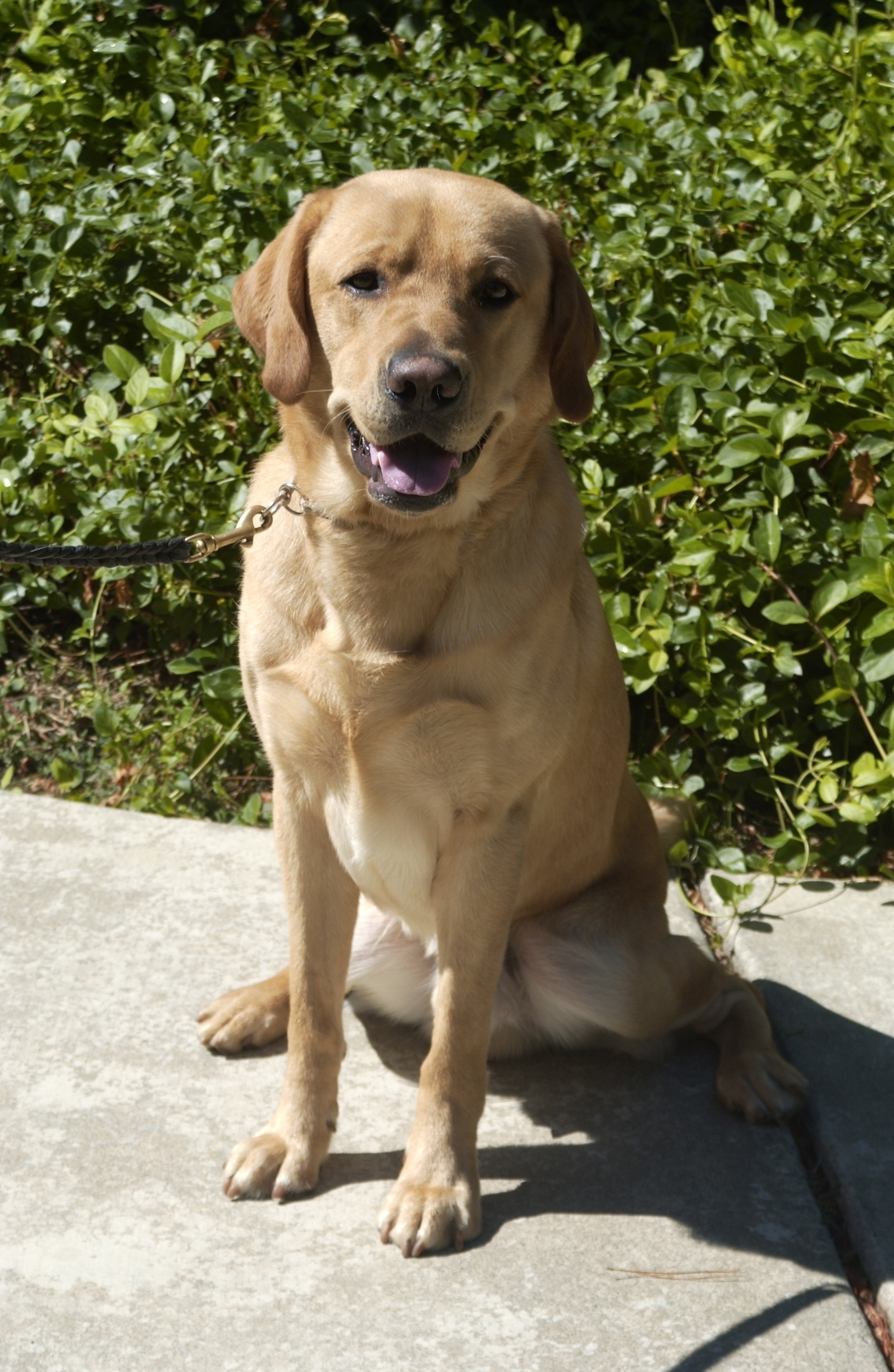
Because Cabana doesn't bark very often, I kind of like hearing her bark. It lets me know she has a voice and can use it. Her bark is LOUD and deep and booming, so I guess we're fortunate that she doesn't bark much.
The one situation when Cabana ALWAYS barks is when I'm filling up her baby pool in the backyard. So this summer, I took advantage of this by teaching her to bark on command. She hasn't quite generalized the behavior yet, though. She will only respond when we're out on the porch, where we put her pool. At first, she would only do it when standing in the pool. But now, if I give the command outside a few times, even without the pool, then slowly move into the house, she will continue to speak when we're inside. But if I give the command inside first, she doesn't get it. So we've still got some perfecting to do.
In the video, Cabana follows my command to speak a few times, but at the end, I accidentally confuse her by telling her to sit instead of speak. She gives me a bark and then sits, after realizing that she goofed.
My husband thinks I'm asking for trouble by teaching her to speak, saying that it will encourage her to bark more. But I've heard that teaching a dog to speak lets you to have more control over when you want them to bark and when you want them to be quiet. Do you think that's true, or will I want to eat my own words?
In my "365 Dogs Page-A-Day" calendar, there is a page that translates "woof woof" in other languages. In all the languages, the word is doubled. But Cabana, being a dog of few words, usually only gives a single bark!
Russia - gav gav
Japan - wan wan
China - wang wang
Iceland -voff voff
Ireland - amh amh
Thailand - hoang hoang
Indonesia - guk guk
France - oua oua
In Korea, they say "mong mong". But Cabana must be speaking English, because I'd say her bark sounds much more like "woof" than "gav" or "hoang". Do you know how they say "woof" in any other countries?